
Introduction: Motorola Edge Review
The Motorola Edge series has become one of Motorola’s most recognizable smartphone families, offering eye‑catchingly curved displays, strong battery life, balanced performance, and near‑stock Android experiences across multiple generations. Whether you’re considering an Edge phone for its camera credentials, want a long‑lasting battery, or simply want to understand how Motorola’s design and hardware philosophy has evolved, this extensive review is designed to give you a complete understanding of the Motorola Edge series — its strengths, weaknesses, and how it’s changed year after year.
Table of Contents
Introduction – What Is the Motorola Edge Series?
The Motorola Edge series emerged as Motorola’s attempt to blend premium design language with mid‑range and upper mid‑range hardware. From the original Motorola Edge launched in 2020 to models released through 2023, 2024, and into 2025, this lineup has consistently aimed to offer curved AMOLED or pOLED screens, smooth performance, and long battery life, often with competitive pricing compared to flagship rivals.
Motorola positions the Edge devices between its more affordable G‑series and ultra‑expensive flagship phones from competitors. The focus has remained on delivering something visually impressive without the premium pricing of true flagship devices. From the Snapdragon 765G version of the original Edge to the Dimensity‑powered versions of recent years, the Edge series spans a wide range of hardware capabilities and consumer expectations.
Display – A Defining Feature
One of the first things users notice about any Motorola Edge phone is the display — and that’s no accident. These phones are designed to impress visually.
Curved Screen Design and Visual Impact
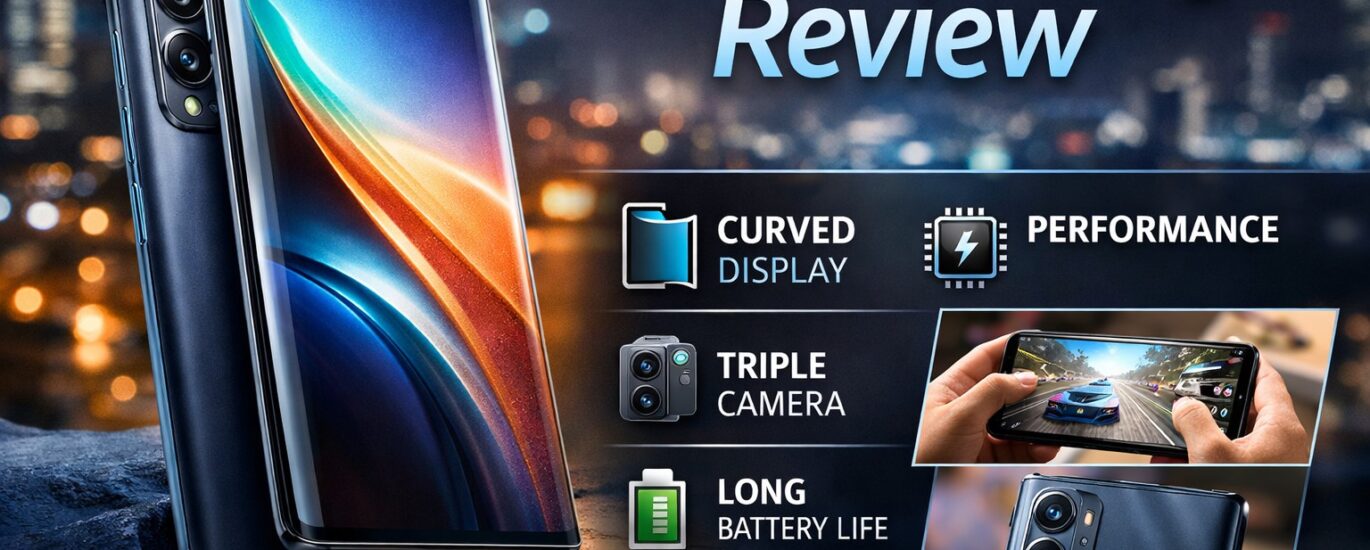
Motorola has embraced curved screens across many Edge phones. This means the display gently wraps toward the sides of the device, creating a visually seamless effect and adding a premium aesthetic. While this design is eye‑catching and immersive, it’s worth noting that curved screens can be more susceptible to accidental touches and reflections, especially in bright outdoor conditions.
Across models, display size has generally stayed in the 6.6 to 6.7‑inch range, with resolutions that are typically Full HD+ but vary slightly by year and variant.
Refresh Rates and Smoothness
Motorola has increasingly adopted high refresh rate panels in its Edge phones. Earlier versions had 90 Hz screens, which already felt smoother than standard 60 Hz displays. More recent models — like the 2024 Edge — have adopted up to 144 Hz refresh rates, providing extremely fluid scrolling and improved responsiveness. High refresh rates make everyday use feel much more responsive and enjoyable, especially when gaming or navigating apps.
HDR and Color Accuracy
Many recent Edge phones support HDR10+ or similar enhancements, delivering deeper contrast and more vivid colors when watching high‑quality video content. OLED and pOLED technologies also ensure excellent contrast ratios and deep blacks, giving Edge phones a display quality that often punches above their price bracket.
Strengths:
- Bright, punchy OLED/pOLED panels
- High refresh rates (smooth UI and gaming experience)
- Immersive curved experience
Weaknesses:
- Curved edges may cause accidental touch issues
- Reflective glass can affect outdoor visibility
Performance – Balancing Speed and Efficiency
Performance is another key area where the Edge series has shifted significantly over time.
Processor Evolution
The original Motorola Edge released in 2020 employed a Snapdragon 765G chipset, which delivered satisfactory performance for everyday tasks but lagged behind flagship devices. Over the years, Motorola diversified its hardware choices:
- Snapdragon variants powered some earlier Edge models
- MediaTek Dimensity series chips have increasingly been used in recent Edge phones, offering powerful mid‑range performance
- Flagship variants like the Edge Plus used Snapdragon 8 series chips for high‑end performance (although this isn’t universal across all Edge devices)
Real‑World Performance
In everyday tasks like web browsing, social media, messaging, and video playback, most Edge phones perform adequately. High‑RAM configurations (8 GB and above) help with smoother multitasking. However, performance varies by model:
- Older models: Snapdragon 765G delivered acceptable but not groundbreaking performance.
- Current mid‑range models: MediaTek Dimensity chips generally offer solid performance for daily tasks, but gaming performance can be modest compared with flagship phones from competitors.
- Some reviewers noted that the Motorola Edge 2025 felt sluggish at times — with slower app launch times and lower benchmark scores compared to Pixel and OnePlus rivals — indicating that performance isn’t always class‑leading.
Gaming and Heavy Tasks
High‑intensity gaming or demanding applications will highlight the limitations of mid‑range processors. While simpler games run smoothly, titles with heavy graphics can show frame rate drops and thermal throttling.
Performance Highlights:
- Smooth everyday performance
- Enough power for moderate apps and games
- High refresh rate benefits UI fluidity
Performance Limitations:
- Mid‑range hardware isn’t as strong for high‑end gaming
- Slight lag or slower responsiveness reported in some units
Battery and Charging – Endurance Meets Convenience
Battery life is a cornerstone of the Motorola Edge experience, and Motorola has gradually improved endurance across generations.
Battery Capacity Across Models
Battery capacities vary depending on the model year:
| Model | Battery Capacity | Charging Support |
|---|---|---|
| Motorola Edge (2020) | 4500 mAh | 18W wired |
| Motorola Edge (2023) | ~4400 mAh | 68W wired, wireless |
| Motorola Edge (2024) | ~5000 mAh | 68W wired, wireless |
| Motorola Edge (2025) & Edge 60 Fusion | ~5200–5500 mAh | 68W wired |
| Edge 60 Pro | ~6000 mAh | 90W wired, wireless |
Real‑World Battery Life
Battery tests show improvements over time. For example, the 2023 Edge maintained strength throughout a full day and still had power left after heavy mixed use, while the 2024 model outperformed many rivals in browsing and video tests.
Battery life varies by use case, but typical outcomes include:
- Multiple hours of screen‑on time with heavy use
- Comfortable all‑day endurance for most users
- Fast charging significantly reduces downtime
Charging Speeds
Charging has improved substantially over the years:
- Early models stuck with 18W charging, which felt slow compared to rivals.
- Later devices support TurboPower charging up to 90W, capable of filling large batteries quickly.
- Wireless charging has been included in several newer models — a premium feature in mid‑range phones.
Camera Performance – A Mixed Bag
Camera quality is a crucial decision factor for many buyers. Motorola has continually improved camera systems; however, performance varies significantly by device.
Primary and Supporting Sensors
Recent Edge phones often adopt multi‑lens setups:
- A high‑resolution main sensor (often 50 MP)
- Ultrawide cameras
- Some models include additional telephoto or macro sensors
- Front cameras typically offer high megapixel counts for selfies
For example, the 2023 Edge’s primary 50 MP camera delivers reliable detail in good lighting, while its ultrawide and selfie cameras are solid options for everyday snaps.
Low Light and Stabilization
While daytime shots often look sharp and well‑exposed, low‑light performance varies:
- Computational photography algorithms help noise reduction, but aren’t always as strong as flagship competitors
- Optical Image Stabilization (OIS) on primary sensors helps with handheld shots, but dynamic range can lag in challenging lighting
Video Quality
Motorola Edge phones typically capture capable video, though stabilization and motion handling aren’t always class‑leading. Recent models provide decent quality but don’t surpass the best in the segment.
Camera Strengths:
- High‑resolution sensors deliver good detail
- Solid performance in daylight
- Broad lens options on newer phones
Camera Weaknesses:
- Low‑light performance can be inconsistent
- Video stabilization isn’t always among the best
- Software processing varies by model
Software Experience – Clean with Some Compromises
Near‑Stock Android and Moto Features
Edge phones largely ship with near‑stock Android, meaning:
- Minimal bloatware
- Unified, intuitive UI
- Useful Moto gestures (like twist‑to‑camera) and Moto tools
Android updates and security patches vary by model, but Motorola typically commits to a couple of years of OS upgrades and a bit longer for security updates.
Software Speed and Bloat
While the near‑stock experience is clean, some users report occasional performance slowdowns and extra AI features getting in the way.
Software Highlights:
- Clean Android UI
- Useful Moto customizations
- Longer‑term security support on recent models
Software Drawbacks:
- Update timelines shorter than some competitors
- Occasional performance slowdowns reported
Comparing Key Motorola Edge Models
| Model | Display | Chipset | Battery | Camera | Charging |
|---|---|---|---|---|---|
| Edge (2020) | 6.7″ 90 Hz OLED | Snapdragon 765G | 4500 mAh | Multi‑lens | 18W |
| Edge (2023) | OLED | Mid‑range Snapdragon | ~4400 mAh | 50 MP + 13 MP | 68W wired, wireless |
| Edge (2024) | pOLED 144 Hz | Snapdragon 7s Gen 2 | ~5000 mAh | 50 MP + UW | 68W |
| Edge (2025) | OLED 120 Hz | MediaTek Dimensity | ~5200 mAh | Improved | 68W |
| Edge 60 Pro | Super HD pOLED | Dimensity 8350 Extreme | ~6000 mAh | Triple camera | 90W + wireless |
Timeline of Motorola Edge Releases
| Year | Model | Notable Features |
|---|---|---|
| 2020 | Motorola Edge | First curved Edge; 90 Hz display, Snapdragon 765G |
| 2023 | Motorola Edge (2023) | Improved camera, 68W TurboPower |
| 2024 | Motorola Edge (2024) | Higher refresh rate, better battery endurance |
| 2025 | Motorola Edge (2025) | MediaTek chipset, brighter display |
| 2025 | Motorola Edge 60 / Edge 60 Pro | Larger batteries, advanced cameras |
| 2026 | New Edge 60 Neo & upcoming models | Latest design refinements and specs |
User Sentiment and Real‑World Feedback
Positive Feedback
- Smooth UI and clear Android experience
- Long battery life, fast charging appreciated
- Curved displays look premium
Criticisms
- Performance isn’t always responsive
- Occasional software bugs or stutters
- Some users experienced screen sensitivity issues
Strengths and Weaknesses – A Balanced View
Strengths
- Stylish curved displays with high refresh rates
- Clean Android experience with useful Moto features
- Long battery life and fast charging capabilities
- Competitive cameras in daylight conditions
Weaknesses
- Performance moderately strong but not top‑tier
- Software updates less competitive than some brands
- Camera performance uneven in low light
- Occasional software interface stutters reported
Frequently Asked Questions (FAQ)
Q1. Is Motorola Edge worth buying in 2026?
Yes — particularly if you value display quality, battery life, and a clean Android UI. Recent models offer balanced specs for mid‑range price points.
Q2. How is the battery life compared to rivals?
Battery life on recent Edge models often matches or beats many competitors, lasting a full day of moderate to heavy use with fast charging capabilities.
Q3. Do Motorola Edge phones have good cameras?
Yes for daylight and everyday photography, but low‑light shots and video stabilization are sometimes less impressive than flagship competitors.
Q4. How long will Motorola Edge phones receive updates?
Recent Edge models come with commitments to multiple years of security updates and OS upgrades, but this can vary by region and specific device.
Conclusion
The Motorola Edge series has carved out a unique space in the smartphone market, balancing premium display design, strong battery life, and a clean software experience against mid‑range performance and competitive pricing. While no single model is perfect, the series offers well‑rounded options for users who value great battery life, fluid displays, and everyday performance without the steep price tag of flagship devices.
The Edge series continues to evolve, and if your priorities are balanced user experience, impressive visuals, and long battery life, the Motorola Edge series remains a compelling choice in 2026.